Aims & Scope
Aims
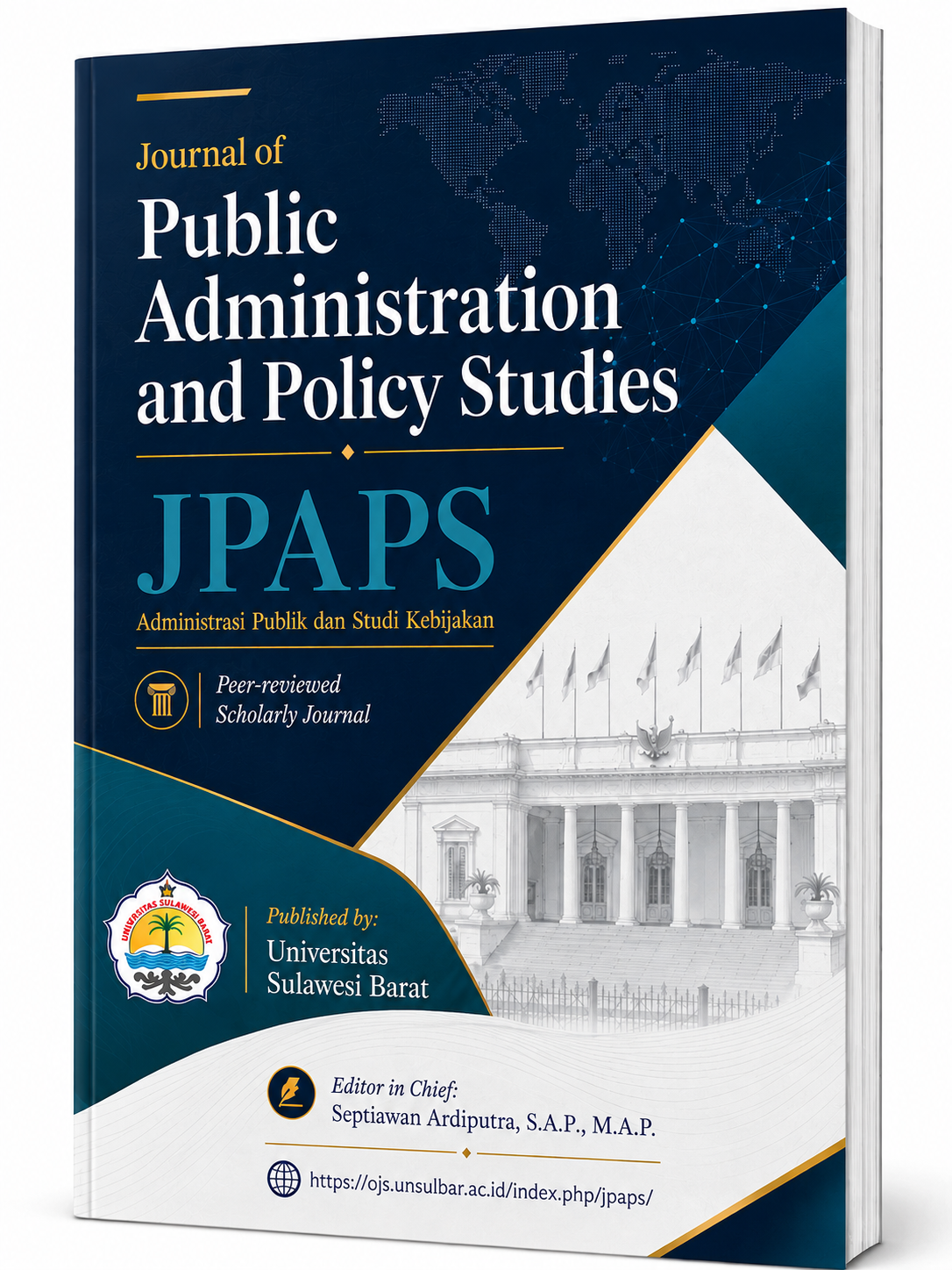
Journal of Public Administration and Policy Studies (JPAPS) is a peer-reviewed scholarly journal dedicated to advancing theoretical, empirical, and practice-relevant knowledge in the fields of public administration and policy studies.
The journal provides an interdisciplinary forum for examining how public institutions, administrative systems, governance arrangements, and societal actors shape the formulation, implementation, evaluation, and outcomes of public policies. It also seeks to advance understanding of how changing policy environments, institutional reforms, technological developments, and societal transformations influence public administration, governance, and public service delivery.
JPAPS encourages scholarship that contributes to the development, refinement, and critical examination of theories, concepts, methods, and practices in public administration and public policy. The journal particularly welcomes studies that bridge theory and practice, provide comparative and cross-national perspectives, address contemporary public problems, and generate insights that are relevant across institutional and geographical contexts.
With an international and interdisciplinary orientation, JPAPS welcomes contributions from scholars, researchers, policymakers, and practitioners from all regions of the world. The journal seeks to facilitate scholarly dialogue across countries and disciplines while providing space for research from diverse administrative systems and governance contexts.
Scope
JPAPS publishes scholarly work addressing public administration, public policy, governance, and related fields. Topics of interest include, but are not limited to:
- Public Administration Theory and Administrative Systems: theories, concepts, institutions, structures, and changing paradigms of public administration.
- Public Management and Public Organizations: organizational behavior, public management, leadership, institutional capacity, performance, and management of public organizations.
- Public Policy and Policy Processes: policy formulation, policy design, decision-making, implementation, monitoring, evaluation, policy change, and policy outcomes.
- Governance and Public Institutions: institutional governance, collaborative governance, network governance, participatory governance, multilevel governance, and relationships among state, market, civil society, and communities.
- Bureaucracy and Street-Level Administration: bureaucratic behavior, administrative discretion, street-level bureaucracy, frontline public services, and interactions between public officials and citizens.
- Public Sector Reform and Innovation: administrative reform, institutional transformation, public sector innovation, organizational learning, and changing models of government.
- Digital Government and Digital Governance: digital transformation of government, e-government, artificial intelligence in the public sector, data-driven governance, smart governance, and technology-enabled public services.
- Public Service Delivery and Public Value: quality, accessibility, effectiveness, equity, co-production, citizen experience, and innovation in public services.
- Decentralization and Multilevel Governance: central–local relations, decentralization, local government, intergovernmental relations, regional governance, and coordination across levels of government.
- Public Leadership and Human Resource Management: public-sector leadership, human resource management, public service motivation, organizational culture, competence, ethics, and professional development.
- Public Finance, Budgeting, and Performance: public budgeting, fiscal governance, financial management, public expenditure, performance management, and public-sector accountability.
- Accountability, Transparency, Ethics, and Integrity: administrative accountability, transparency, public-sector ethics, integrity systems, corruption prevention, and responsible governance.
- Administrative Law and Regulatory Governance: regulatory institutions, administrative regulation, implementation of administrative law, regulatory governance, and relationships between law, administration, and public policy.
- Citizen Participation and State–Society Relations: citizen engagement, deliberative governance, co-governance, social accountability, civil society, and interactions between governments and communities.
- Comparative and International Public Administration: comparative administrative systems, administrative traditions, cross-national public management, international administration, and institutional comparison.
- Policy Transfer, Diffusion, and Policy Learning: diffusion and adaptation of policies across jurisdictions, policy learning, international policy transfer, and global–local policy interactions.
- Sectoral and Development Policies: including social policy, health policy, education policy, environmental and climate policy, urban policy, rural development, disaster governance, economic and development policy, and other substantive policy areas, provided that the manuscript makes a clear contribution to public administration, public policy, or governance scholarship.
JPAPS welcomes qualitative, quantitative, mixed-methods, comparative, historical, experimental, computational, and other methodologically rigorous approaches, as well as theoretical and conceptual studies and systematic evidence syntheses that make a clear scholarly contribution.
The journal particularly encourages research that moves beyond purely descriptive accounts by engaging with relevant theories, concepts, or analytical frameworks and demonstrating the broader significance of its findings for public administration, public policy, governance, or public-sector practice.
JPAPS is not geographically restricted and welcomes manuscripts addressing local, national, regional, comparative, and global contexts. Studies based on specific countries or localities are welcome when they provide analytical insights, theoretical contributions, policy lessons, or implications that are relevant beyond the immediate case.