Peer Review Process
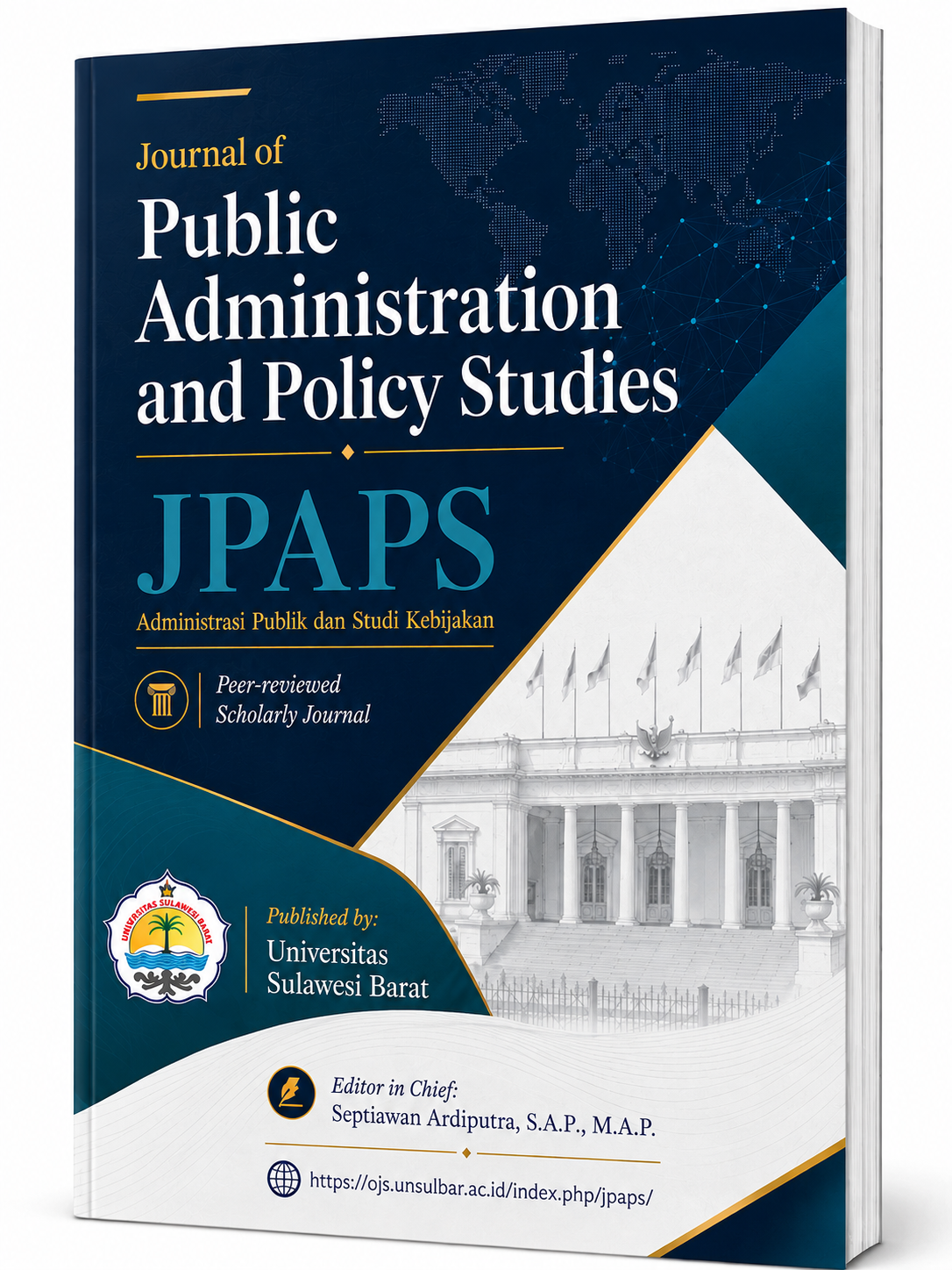
Journal of Public Administration and Policy Studies (JPAPS) is committed to maintaining a rigorous, fair, independent, and transparent peer-review process to ensure the academic quality, originality, relevance, and integrity of all articles published in the journal.
All research manuscripts submitted to JPAPS are subject to initial editorial screening and, when considered suitable for further evaluation, undergo double-anonymized peer review by qualified independent reviewers.
1. Initial Editorial Screening
Each submitted manuscript is initially evaluated by the Editorial Team to determine whether it meets the basic requirements of JPAPS.
The initial screening considers the manuscript's relevance to the journal's aims and scope, originality, scholarly contribution, methodological adequacy, academic quality, compliance with author guidelines, ethical requirements, and overall suitability for peer review.
Manuscripts may also undergo plagiarism and similarity screening in accordance with the journal's Plagiarism Screening Policy.
A manuscript that clearly falls outside the journal's scope, does not meet minimum scholarly standards, does not comply with essential submission requirements, or presents serious ethical concerns may be rejected at this stage without external peer review.
2. Double-Anonymized Peer Review
JPAPS applies a double-anonymized peer-review process, in which the identities of the authors are concealed from the reviewers and the identities of the reviewers are concealed from the authors.
Authors are responsible for preparing an anonymized manuscript and removing information that may directly reveal their identities or institutional affiliations from the manuscript submitted for review.
The Editorial Team will take reasonable measures to preserve anonymity throughout the peer-review process.
3. Selection of Reviewers
Manuscripts that pass the initial editorial screening are normally evaluated by at least two independent reviewers with relevant expertise in the subject area and methodology of the manuscript.
Reviewers are selected on the basis of their academic expertise, research experience, independence, and suitability to evaluate the manuscript.
The Editorial Team seeks to avoid conflicts of interest in reviewer selection. Reviewers should not evaluate manuscripts where personal, professional, financial, institutional, or other relationships could reasonably compromise the independence or objectivity of the review.
4. Review Criteria
Reviewers are expected to evaluate manuscripts on the basis of their scholarly merit and provide constructive recommendations to the authors and editors.
The review generally considers the originality and significance of the study, relevance to the aims and scope of JPAPS, clarity of the research problem and objectives, engagement with relevant literature and theoretical perspectives, appropriateness and rigor of the methodology, quality of analysis and interpretation, validity of conclusions, contribution to public administration and policy studies, quality of academic writing, and compliance with research and publication ethics.
Reviewers may also identify important literature that has not been appropriately considered and may alert the editor to suspected plagiarism, duplicate publication, data or evidence manipulation, inappropriate citation practices, or other potential ethical concerns.
5. Reviewer Confidentiality
All manuscripts submitted for peer review must be treated as confidential documents.
Reviewers must not disclose, reproduce, distribute, discuss, or use unpublished information contained in a manuscript for personal, professional, academic, or competitive advantage.
Reviewers must comply with the journal's Publication Ethics and AI Policy. Submitted manuscripts, manuscript excerpts, supplementary materials, and confidential editorial information must not be uploaded to generative artificial intelligence systems for the purpose of conducting or generating peer review.
6. Editorial Decision
After considering the reviewers' reports and the editor's own assessment, an editorial decision will be made.
The decision may be:
- Accept
- Minor Revision
- Major Revision
- Reject
The final decision regarding a manuscript rests with the responsible editor based on the scholarly quality of the manuscript, the reviewers' recommendations, compliance with journal policies, and the overall contribution of the work.
Reviewer recommendations are advisory and do not automatically determine the final editorial decision.
7. Revision Process
When revision is requested, authors should carefully address the comments and recommendations provided by the reviewers and editors.
Authors are expected to submit a revised manuscript together with a clear response explaining how each substantive comment has been addressed. Where an author disagrees with a reviewer recommendation, an academic justification should be provided.
A revised manuscript may be returned to the original reviewers or evaluated by the editor, depending on the nature and extent of the revisions required.
Major revisions may undergo additional rounds of peer review when necessary.
8. Conflicting Reviewer Recommendations
When reviewer recommendations differ substantially, the responsible editor will evaluate the reports and the manuscript before making a decision.
Where additional expertise is required, the editor may invite an additional independent reviewer.
Editorial decisions will be based on scholarly considerations and will not be determined merely by the number of positive or negative reviewer recommendations.
9. Editorial Independence and Conflicts of Interest
Editorial decisions are based on academic merit and must remain independent from inappropriate institutional, personal, political, financial, or commercial influence.
If an editor has an actual or potential conflict of interest involving a manuscript, the editor must withdraw from handling the manuscript and responsibility will be assigned to another qualified editor.
Manuscripts submitted by members of the Editorial Team are subject to the same editorial and peer-review standards as other submissions and must be handled by an editor who has no conflict of interest with the authors.
10. Research and Publication Ethics
Reviewers and editors are expected to notify the journal when they identify or reasonably suspect plagiarism, fabrication, falsification, duplicate publication, inappropriate authorship, citation manipulation, undisclosed conflicts of interest, unethical research practices, or other forms of research or publication misconduct.
Such cases will be handled in accordance with the journal's Publication Ethics policy.
11. Appeals
Authors may appeal an editorial decision when they believe that a substantive academic or procedural error has occurred during the review or decision-making process.
An appeal must provide clear and reasoned grounds supported by relevant academic or procedural arguments.
Appeals will be evaluated independently where appropriate. Submission of an appeal does not guarantee reconsideration or reversal of the original editorial decision.
12. Final Responsibility
The peer-review process provides expert scholarly assessment and recommendations, but responsibility for the final decision concerning publication rests with the Editor-in-Chief or the editor formally assigned to handle the manuscript.
Acceptance of a manuscript is based on its academic quality, originality, relevance, methodological rigor, ethical compliance, and contribution to the fields covered by JPAPS.